Proper food storage is important for maintaining product quality, reducing exposure to environmental factors, and organizing supplies for longer-term use. Whether businesses package dry foods or households store pantry essentials, selecting suitable packaging can make a noticeable difference.
Mylar bags combined with oxygen absorbers are commonly used for storing certain dry products. This combination helps limit exposure to oxygen when the packaging is properly sealed and used under suitable storage conditions. Understanding how these materials work can help businesses and consumers make more informed packaging decisions.
What Are Mylar Bags?
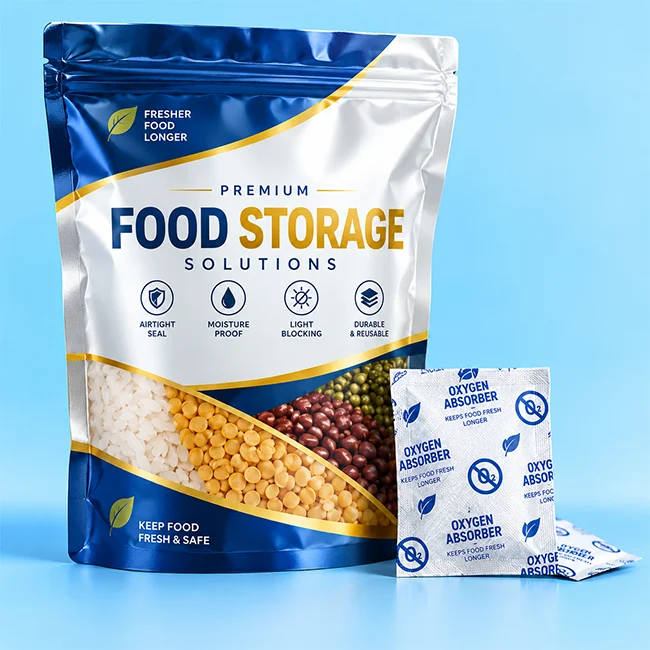
Mylar bags are flexible packaging bags made with polyester film, often combined with additional barrier layers. Their construction can provide resistance to moisture, light, and gases, depending on the specific material structure.
These bags are used for packaging products such as dried foods, grains, powdered ingredients, snacks, and other items that benefit from protective packaging. They are available in different sizes, thicknesses, and styles to accommodate various storage requirements.
Unlike ordinary thin plastic bags, high-barrier Mylar packaging is designed to provide a more protective environment. However, the actual barrier performance depends on the bag’s construction, quality, and sealing method.
Understanding the Role of Oxygen Absorbers
Oxygen absorbers are small packets containing materials that react with oxygen inside a sealed package. They are used to reduce the amount of oxygen remaining in the package after sealing.
Oxygen can contribute to oxidation, which may affect the quality of certain foods. It can also support the activity of some insects and microorganisms under suitable conditions. Reducing oxygen can therefore help protect certain dry products during storage.
Oxygen absorbers are commonly used with properly sealed, high-barrier packaging. They should not be confused with moisture absorbers, as both products serve different purposes.
It is also important to remember that oxygen absorbers do not make unsuitable food safe or eliminate every storage risk. Products must be properly dried, prepared, and packaged before storage.
Benefits of Combining Mylar Bags with Oxygen Absorbers
Using suitable Mylar bags with correctly sized oxygen absorbers can offer several advantages for specific storage applications.
1. Reduced Oxygen Exposure
Once the bag is sealed, an oxygen absorber can help remove residual oxygen from the package. This may slow oxidation in products that are sensitive to oxygen exposure.
2. Support for Product Quality
Certain dry foods can experience quality changes when exposed to oxygen over time. Reducing oxygen inside a properly sealed package can help preserve their intended quality, depending on the product and storage conditions.
3. Protection from External Factors
High-barrier Mylar bags can help limit exposure to moisture, light, and outside air. Their performance depends on the material layers and the quality of the seal.
4. Convenient Storage
Flexible bags are easy to organize and can be stored in containers, cupboards, or suitable storage areas. Their lightweight construction also makes them practical for packaging and transportation.
5. Different Size Options
Mylar bags are available in multiple sizes, allowing users to package different quantities. Smaller bags may suit individual portions, while larger options can accommodate bulk dry goods.
Choosing Wholesale Mylar Bags with Oxygen Absorbers
Businesses that package dry products regularly may benefit from purchasing wholesale Mylar bags with oxygen absorbers. Buying packaging in larger quantities can help maintain a consistent supply and simplify inventory planning.
Before ordering, businesses should evaluate the type of product being packaged, the required bag dimensions, material thickness, and barrier performance. They should also confirm whether oxygen absorbers are included or need to be purchased separately.
The absorber size must match the amount of oxygen expected inside the package. This depends on factors such as the package volume, the product’s characteristics, and the amount of air trapped during filling.
Following the absorber manufacturer’s sizing instructions is important. Using an unsuitable absorber size may reduce the effectiveness of the packaging process.
How to Use Mylar Bags Correctly
Correct packaging practices are essential for achieving reliable storage results. Even a high-barrier bag may not provide the expected performance if it is poorly sealed or used with an unsuitable product.
Consider these general steps:
- Prepare the product: Make sure the food is appropriate for dry storage and has been properly prepared. Mylar bags are not a substitute for safe food processing.
- Select the right bag: Choose a size and material structure suitable for the product and expected storage conditions.
- Add the absorber: Use an oxygen absorber with a capacity recommended for the package size and product.
- Remove excess air where appropriate: Arrange the contents so the bag can be sealed properly without damaging the product.
- Seal the package: Use a suitable heat-sealing method and check that the seal is complete.
- Label the bag: Include product identification and relevant storage information.
- Store correctly: Keep sealed packages in a cool, dry location away from direct sunlight and excessive heat.
Oxygen absorbers should be handled according to their manufacturer’s instructions. Once exposed to air, they begin working, so unused packets should be kept properly sealed.
Flexible Packaging Solutions for Different Industries
Modern businesses need packaging that matches their products, storage requirements, and distribution methods. This is where flexible packaging solutions can offer useful options.
Flexible packaging includes pouches, bags, sachets, and other formats designed for different product categories. Food manufacturers may use high-barrier pouches for dry ingredients, while retailers may choose resealable bags for snacks and specialty products.
Different packaging structures provide different levels of protection. For example, a product that is sensitive to moisture may require a material with suitable moisture-barrier properties. Another product may need protection from light or oxygen.
Businesses should select packaging based on the product’s actual requirements rather than assuming that every flexible pouch provides the same level of protection.
Common Mistakes to Avoid
A few simple mistakes can affect the performance of storage packaging.
- Using bags that do not provide the required barrier properties.
- Selecting oxygen absorbers without checking the recommended capacity.
- Failing to create a complete and secure heat seal.
- Using oxygen absorbers with products that are not suitable for this storage method.
- Storing packages in areas exposed to high temperatures or moisture.
- Assuming oxygen absorbers also control moisture.
Avoiding these mistakes can help businesses develop a more consistent packaging process.
Final Thoughts
Mylar bags and oxygen absorbers can work together to support the storage of suitable dry products. High-barrier packaging helps limit exposure to external conditions, while oxygen absorbers reduce residual oxygen inside properly sealed packages.
For businesses, selecting the correct bag structure, absorber capacity, and sealing method is essential. By understanding these factors, companies can choose packaging that better matches their products and storage goals. Businesses interested in exploring suitable options can visit Label Pouches for more information.