
Setting goals is the foundation of any new skill. When you decide to learn to type, you likely want to reach high speeds immediately. It is natural to see professional typists and want to match their pace. However, the path to mastery is built on small and steady steps. If you set goals that are too difficult, you will feel frustrated. If you do not set any goals at all, you might lose interest.
A realistic goal is one that challenges you but remains within reach. It takes your current skill level into account. It also considers how much time you can practice each day. Typing is a physical and mental habit. You are training your brain and your fingers to work in perfect harmony. This process cannot be rushed. It requires patience and a clear plan.
Key Takeaways
- Start by taking a baseline test to understand your current skill level.
- Focus on accuracy before you try to increase your raw speed.
- Set small and incremental milestones rather than one massive goal.
- Dedicate a specific amount of time for daily practice to build habits.
- Use words per minute and accuracy percentages to track growth.
- Adjust your goals as you improve to keep the challenge alive.
- Remember that physical comfort and posture affect your ability to reach targets.
- Celebrate small wins to keep your motivation high over many months.
What is a realistic typing goal for a beginner?
For someone just starting, a realistic goal is not a high speed. Instead, the goal should be about form. You should aim to learn the home row without looking at your hands. If you can type twenty words per minute using the correct fingers, you are doing great. This is a much better goal than typing forty words per minute using only two fingers.
A beginner should focus on the transition from hunting and pecking to touch typing. This transition takes time. Your brain is building new neural pathways. At first, you might even feel slower than you were before. This is normal. A realistic goal for the first month is simply to memorize the location of every key. Once you know where the keys are, your speed will start to climb.
Try to set a goal of finishing one or two lessons every day. Do not worry about the clock yet. Focus on hitting the right letters. If you can reach ninety five percent accuracy at any speed, you have met a very important goal. Success for a beginner is measured by how well you follow the rules of touch typing.
Why is starting with a baseline test important?
You cannot plan a journey if you do not know where you are starting. A baseline test is a simple typing exam that tells you your current speed and accuracy. You should take this test before you set any other goals. It gives you a number to compare against in the future. Without a baseline, you are just guessing about your improvement.
When you take your first test, do not try to be faster than you really are. Type at your natural pace. This gives you an honest look at your skills. Maybe you type thirty words per minute with five errors. Now you have a clear starting point. Your first goal could be to reach thirty five words per minute while keeping the same number of errors.
Record your baseline in a journal or a digital file. Every few weeks, take the same test again. Seeing the difference between your current score and your baseline is very motivating. It proves that your practice is working. It also helps you see if your goals are too easy or too hard.
How does the accuracy rate affect your progress?
Accuracy is the most important metric in typing. Many people make the mistake of only looking at their words per minute score. They think that being fast is the only thing that matters. But if you make many mistakes, your speed is fake. You will spend all your time fixing typos in the real world. This makes you much slower overall.
A realistic goal for accuracy should always be between ninety five and ninety eight percent. If your accuracy is lower than ninety five percent, you are typing too fast. You are building bad habits into your muscle memory. Your goal should be to slow down until you can type perfectly. Precision is the foundation of true speed.
Once you can maintain a high accuracy rate, you can start to push your speed. If you can type at ninety eight percent accuracy, try to go a little bit faster. If your accuracy drops, pull back. This balance is the key to steady improvement. By making accuracy a priority, you ensure that your progress is permanent and reliable.
What are the common speed milestones to aim for?
Speed milestones help you break a big goal into small pieces. For most people, the first big milestone is thirty words per minute. This is the speed of an average person who hunts and pecks. Reaching this speed using touch typing is a huge win. It means you have mastered the basics of the keyboard.
The next milestone is forty to fifty words per minute. This is the speed required for most office jobs. It is fast enough to keep up with your thoughts while you write an email or a report. After that, you can aim for sixty to seventy words per minute. This is considered professional speed. At this level, you are faster than the majority of computer users.
Elite typists aim for eighty words per minute and beyond. Reaching these levels takes a lot of dedicated practice over a long time. When setting your goals, look at these milestones as levels in a game. Do not try to jump from thirty to eighty. Focus on reaching forty first. Each milestone you hit will give you the confidence to reach for the next one.
How do you set a schedule that actually works?
A goal without a schedule is just a wish. To reach your typing targets, you need a plan for when you will practice. The best schedule is one that is short and frequent. Your brain learns best when it sees the same information every day. Practicing for fifteen minutes every morning is much better than practicing for two hours once a week.
Try to find a time in your day that is always free. This could be right after breakfast or during a lunch break. Use this time to do a few races on Nitro Type or a few lessons in a typing program. By making it a habit, you do not have to rely on willpower. It just becomes something you do as part of your day.
If you are busy, set a goal of just five minutes. Everyone has five minutes. The goal is to keep your fingers moving and your brain engaged. Consistency is the secret to building muscle memory. If you stay consistent, you will reach your goals much faster than someone who practices in large, irregular bursts.
Why should you focus on muscle memory over raw speed?
Muscle memory is the ability of your fingers to find keys without your brain thinking about it. This is the ultimate goal of typing. When you have strong muscle memory, you can focus entirely on your ideas. The typing happens automatically. This is much more important than just being fast for a few seconds during a test.
Your goals should reflect this. Instead of saying you want to be fast, say you want to be smooth. A smooth typist has a steady rhythm. They do not have long pauses between words. They do not have to stop to look at the keyboard. Building this rhythm takes hundreds of repetitions.
A realistic goal is to type a full paragraph without any pauses. This shows that your muscle memory is working well. As your muscle memory gets stronger, your speed will increase without any extra effort. Think of speed as a side effect of good muscle memory. Focus on the habit, and the numbers will follow.
How can competitive games help you reach your goals?
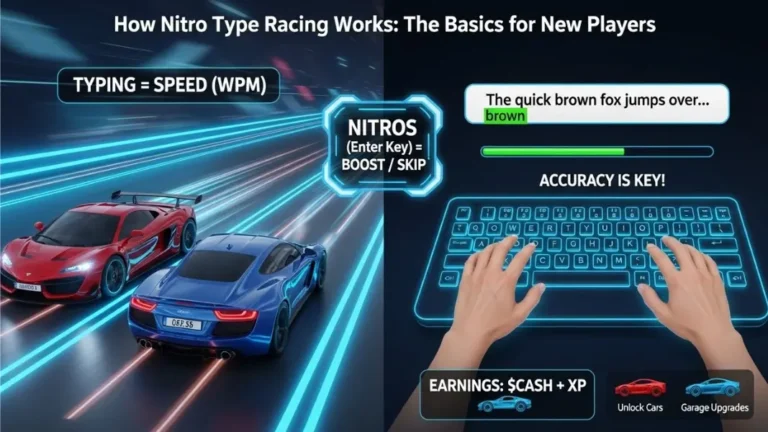
Practice can sometimes feel boring. This is why competitive games like Nitro Type are so helpful. They add excitement to the learning process. In a game, you have a clear goal: win the race. To win, you must type fast and accurately. This high pressure environment is great for testing your skills.
You can set goals within the game itself. Maybe your goal is to finish in the top three for five races in a row. Or maybe your goal is to earn enough gold to buy a specific car. these goals keep you engaged. They make the repetition of typing feel like a sport rather than a chore.
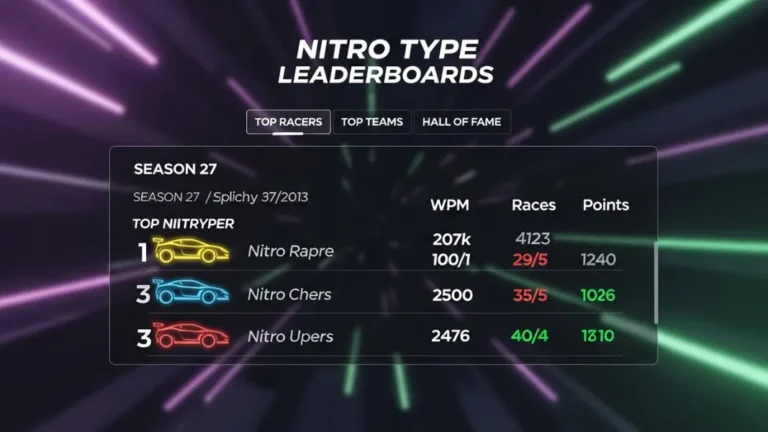
Games also show you how you compare to others. If you see someone typing at your target speed, it proves that the goal is achievable. It pushes you to work a little harder. Just remember to keep your focus on your own progress. Use the game as a tool to reach your personal targets, and do not get discouraged if others are faster.
What are the physical signs that you need to slow down?
Reaching your typing goals is a physical task. Your hands, wrists, and shoulders are all involved. Sometimes, your mind wants to go faster than your body is ready for. If you start to feel pain or tension, it is a sign that you need to slow down. Pushing through pain can lead to injuries like carpal tunnel syndrome.
A realistic goal includes taking care of your body. Set a goal to check your posture every ten minutes. Are your shoulders relaxed? Are your wrists straight? If you notice that you are tensing up during a fast race, take a break. Your goal should be to type comfortably for long periods.
Stretching is also a good habit to include in your routine. Set a goal to stretch your fingers and wrists after every practice session. This keeps your hands flexible and ready for the next day. Typing is a long term skill, and you need to keep your body healthy to master it. If you respect your physical limits, you will reach your goals much more safely.
How do you handle a plateau in your typing speed?
A plateau is a period where your speed stops increasing. You might stay at fifty words per minute for weeks, no matter how much you practice. This can be very frustrating. Many people quit when they hit a plateau. But a plateau is actually a sign that your brain is busy solidifying what you have already learned.
When you hit a plateau, you should adjust your goals. Stop trying to increase your speed. Instead, set a goal for perfect accuracy. Or try to type different kinds of text, like poetry or code. Changing your focus gives your brain a break from the pressure of speed.
Often, if you stay consistent during a plateau, you will experience a sudden jump in speed later. It is like your brain was building a foundation in the background. Once the foundation is ready, the speed comes all at once. A realistic goal during a plateau is simply to not give up. Keep showing up, and the progress will return.
Why is tracking your data the best way to stay motivated?
Motivation can fade over time. This is why tracking your data is so important. When you have a record of your speed and accuracy, you have proof of your growth. On days when you feel slow, you can look back at where you started. You will see that you have actually come a long way.
Use a simple chart or a spreadsheet to track your progress. Write down your average speed at the end of every week. You will see a line that trends upward over time. This visual evidence is a powerful motivator. It turns your typing practice into a science. You can see exactly which goals you have met and which ones you still need to work on.
Data also helps you be honest with yourself. If your speed has not changed in a month, you can look at your practice log. Maybe you have been skipping days. Or maybe you have been ignoring your accuracy. The data shows you exactly what you need to do to get back on track. It keeps you focused on the facts rather than your feelings.
Conclusion
Mastering the keyboard is a process of constant growth. By setting realistic typing goals, you give yourself a path to success. You move away from the frustration of unrealistic expectations and toward the joy of steady improvement. Every word per minute you gain is a victory that you earned through discipline and focus.
Remember to be patient with yourself. Some days will be easier than others. The important thing is to keep moving toward your milestones. Whether you want to be a professional writer or just finish your homework faster, typing is a skill that will serve you forever. Treat your goals with respect, and they will help you reach levels of speed you never thought possible.
Your journey is unique to you. Do not compare your beginning to someone else’s middle. Focus on your baseline, protect your accuracy, and stay consistent with your practice. With the right goals in place, the keyboard will eventually feel like an extension of your own mind. The finish line is waiting, and you have everything you need to get there.